
A looking
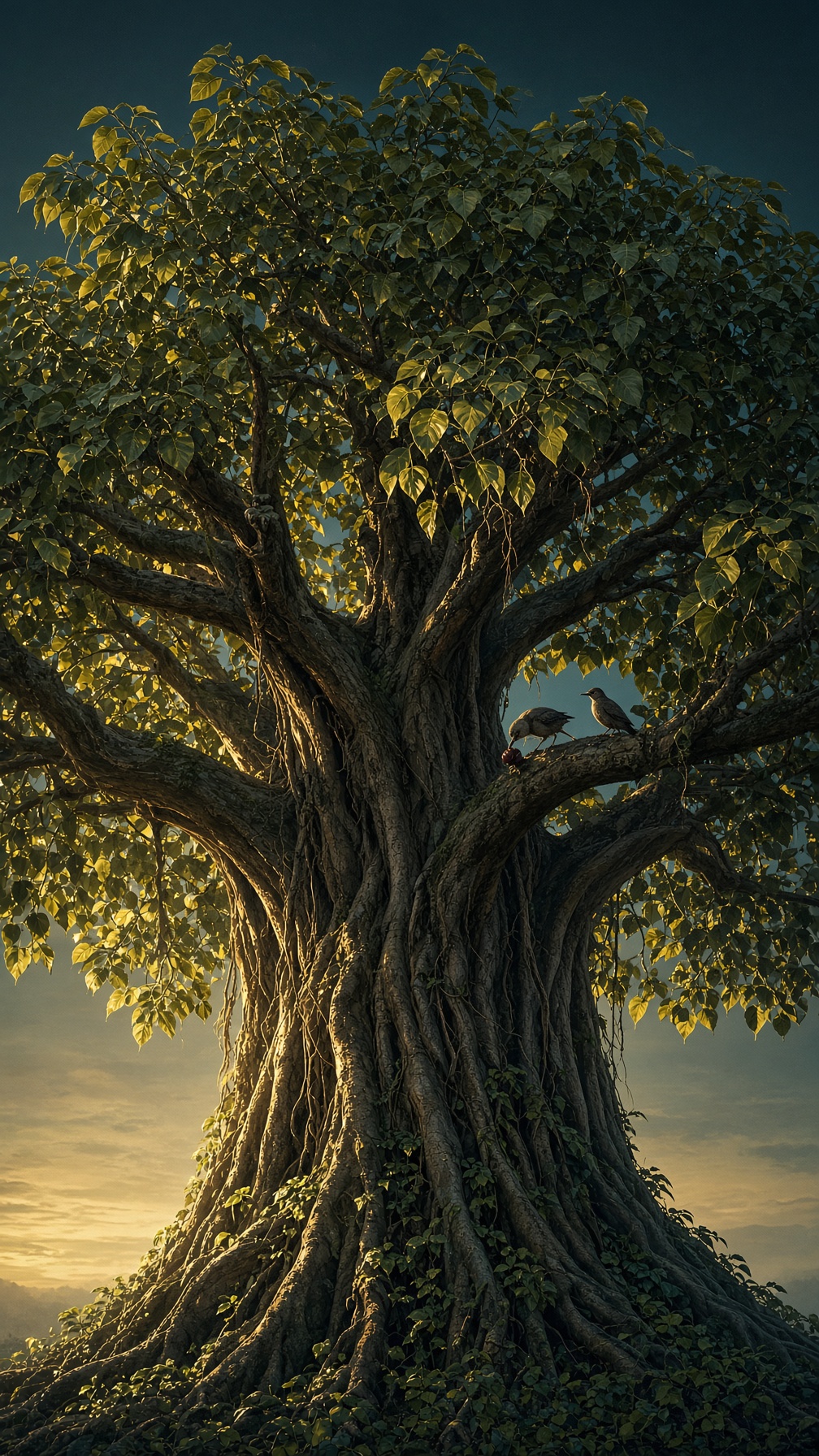
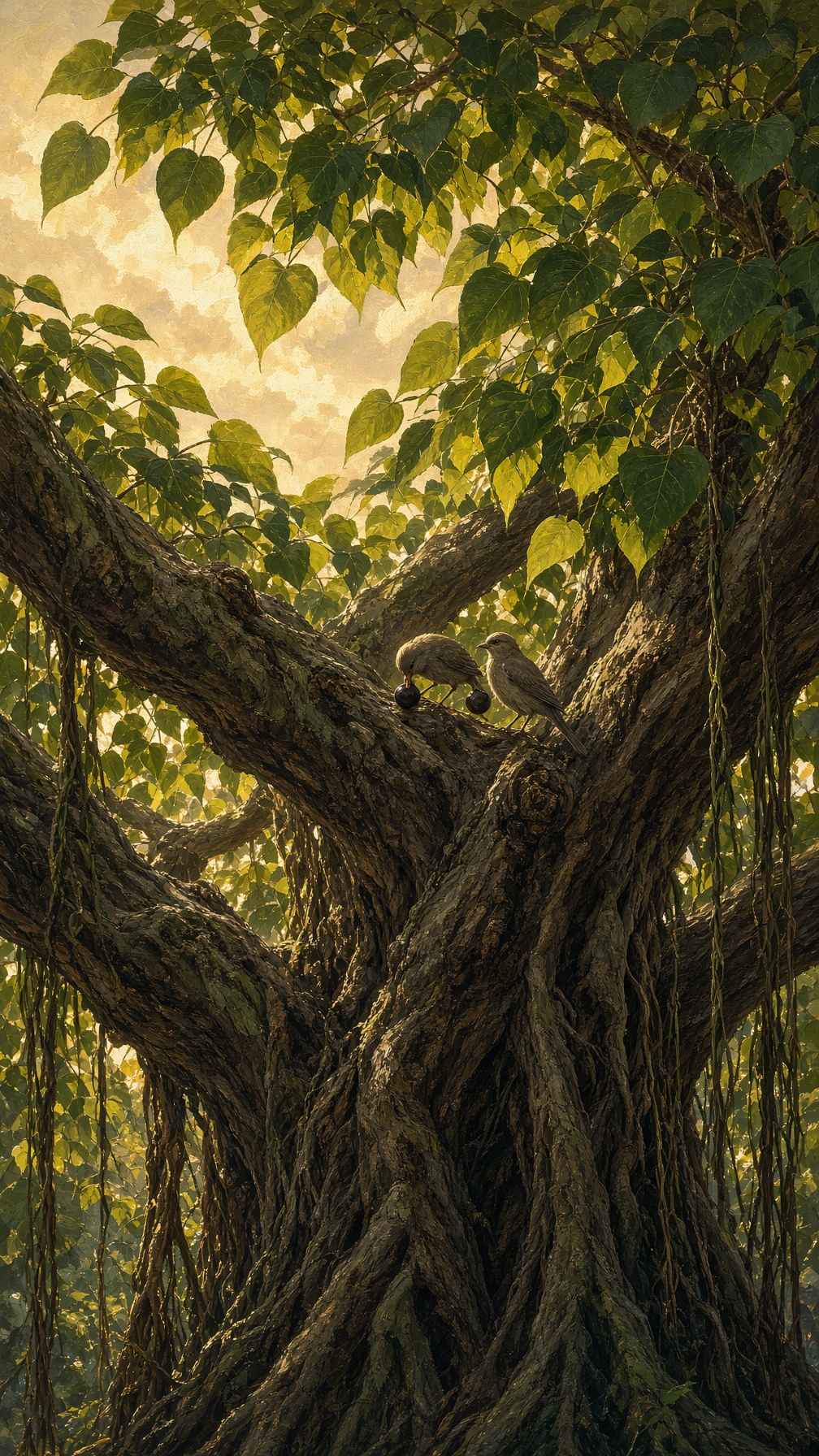
Two birds on one tree
“You do not pick one bird
and exile the other.”
One tree is a life. One fruit is a day. One bird tastes. One looks. Grief ends, the verse says, not when the fruit improves, but when the eater sees the watcher.
3.1.1
dvā suparṇā sayujā sakhāyā samānaṃ vṛkṣaṃ pariṣasvajāte
“Two birds, beautiful of wing, close companions, cling to one common tree. Of the two, one eats the sweet fruit. The other eats not, but watches his fellow.”
Mundaka Upanishad 3.1.1 · English after Sri Aurobindo
3.1.2
samāne vṛkṣe puruṣo nimagno ’nīśayā śocati muhyamānaḥ
“On the same tree a person is sunk, deluded, grieving from helplessness. When he sees the other, the Lord who is content, and his greatness, grief falls away.”
Mundaka Upanishad 3.1.2
A few words
dvā suparṇā · sayujā sakhāyā · samānaṃ vṛkṣam · pippala · atti / anaśnan · abhicākaśīti
dvā suparṇā
two, of fair wing. Not mascots. Souls that can fly.
sayujā sakhāyā
yoked together, companions. Not a merger. A pair that will not unstick.
samānaṃ vṛkṣam
the same tree. Shankara reads the body. Also a life, a world, a game board.
pippala
the fruit, the peepal’s berry. Sweet. Also karma: pleasure and pain, the playthrough.
atti / anaśnan
eats / does not eat. Player and witness. Desire, and the one who can still see.
abhicākaśīti
looks on, gazes. Awareness awakening. Consciousness noticing itself.
The eater
The eating bird is the one in the scene: tasting, grieving, falling in love. The watching bird is the one that is not consumed. Know thyself is that seeing. The eating bird looking up is awareness awakening.
The watcher
Do not hire a beloved to be the bird that only looks, so you can stay the one that only eats. Anyone may eat. Anyone may watch. The inner pair has to sit first. Then two lives can share a field without eating each other.
The image is older than Mundaka. The Rigveda already perched two birds on one tree. This house only needs the pair: player and witness, in an ordinary life.
The moth still has to approach the lamp. The soul can love with the light on. The eating bird without the watcher drowns in the sweet. The watching bird without the eater never lives. Love, if it is clean, makes a third field without erasing either one.
If you are only eating, write until you can also look. If you are only looking, write until you can also taste. The letter is fruit offered, not forced. The other remains free. You still have a tree.
You do not pick one bird and exile the other.